ARINCDirect
Unifying business aviation operations — from cabin connectivity to flight planning — into a single intelligent portal.
Problem Statement
Business aviation operators manage mission-critical services — high-speed cabin connectivity, VHF and satellite data link, flight planning, graphical weather, and direct dial — across fragmented vendors, contracts, and login portals.
•No single source of truth for fleet status•Connectivity performance is invisible until it fails•Data usage and cyber threats go unmonitored•Vendor management is complex with multiple contracts and invoices•Flight planning and scheduling live in separate systems
Solution
Designed a unified Operator Portal that consolidates all ARINCDirect One Plan services into a single intelligent interface — providing real-time fleet status, connectivity performance monitoring, data usage analytics, and cybersecurity threat detection, all through one login, one contract, and one 24/7/365 support number.
Key Results
Aircraft supported
Across 200+ operatorsFaster fleet visibility
Real-time vs. manualUnified login
From 5+ separate portalsDiscovery & Research
Conducted stakeholder interviews with flight operations managers, pilots, and IT administrators across 12+ operators to map the fragmented service landscape and identify pain points across the ARINCDirect ecosystem.

Pain Points — Voice of the Operator
- I juggle 5+ portals to check my fleet's status.
- Connectivity issues are invisible until a passenger complains.
- I can't see data usage until the monthly invoice arrives.
- Multiple vendors mean multiple contracts, invoices, and support numbers.
- Weather, flight planning, and connectivity live in completely separate systems.
Key Insights
Operators lack a single source of truth for fleet health and connectivity performance.
Issues are discovered only after they impact passengers — not before.
Managing 5+ separate vendors creates administrative friction and hidden costs.
Market Analysis
The in-flight connectivity market is served by four dominant players, each using different technology and network strategies to deliver internet to aircraft. Understanding their strengths helps position ARINCDirect as the unified layer that integrates all of them.

Gogo Business Aviation
01Pioneered air-to-ground in-flight connectivity for business aviation. Its ATG network blankets the continental US with low-latency links, while its evolving 5G ATG service promises gigabit-class speeds. Satellite solutions (Iridium, SES) extend coverage internationally.
Viasat
02Operates a high-capacity Ka-band satellite constellation delivering multi-gigabit throughput per aircraft. Its high-capacity model lets many passengers stream simultaneously — a differentiator on bandwidth-heavy routes.
Inmarsat
03Global Xpress Ka-band network delivers seamless worldwide connectivity including over oceans and polar regions — critical for long-haul and transoceanic business aviation routes where ATG cannot reach.
Panasonic
04Panasonic Avionics pairs its Ku-band satellite connectivity with its eX series in-flight entertainment systems — a bundled offering that appeals to airlines wanting a single vendor for both Wi-Fi and entertainment.
Empathy
Understanding the human side of aviation operations across three distinct user groups — each with different needs, goals, and frustrations.
Sarah
Flight Ops Manager"I need my fleet's status at a glance — not across five tabs."
Captain Mike
Pilot"I need weather, flight plans, and data link in one place."
Alex
Business Traveler"If the Wi-Fi doesn't work, my meeting falls apart."
Journey Mapping
Mapping the current-state experience of a flight operations manager across pre-flight, in-flight, and post-flight touchpoints revealed fragmentation at every step.
Current-State Journey — Flight Operations Manager
Define
How might we unify fragmented aviation services — cabin connectivity, flight planning, data link, weather, and direct dial — into a single intelligent portal that gives operators real-time fleet visibility?
Success Metrics
Business KPIs
Ideation
Instead of five separate portals, we designed a unified Operator Portal with real-time fleet intelligence.
Solution Directions
Ideation Concepts
Fleet Status Map
A visual, real-time world map showing aircraft positions with connectivity health overlays.
Connectivity Health Cards
Per-aircraft status cards with signal strength, performance metrics, and active alerts.
Data Usage Analytics
Historical consumption trends with predictive forecasting and automated threshold alerts.
Unified Service Hub
All ARINCDirect services accessible from a single navigation — no more portal switching.
Cyber Security Shield
Fleet-wide threat detection with severity-based alerts and recommended actions.
Information Architecture
Restructured five disconnected service portals into a single context-aware navigation model.
Mobile Flow
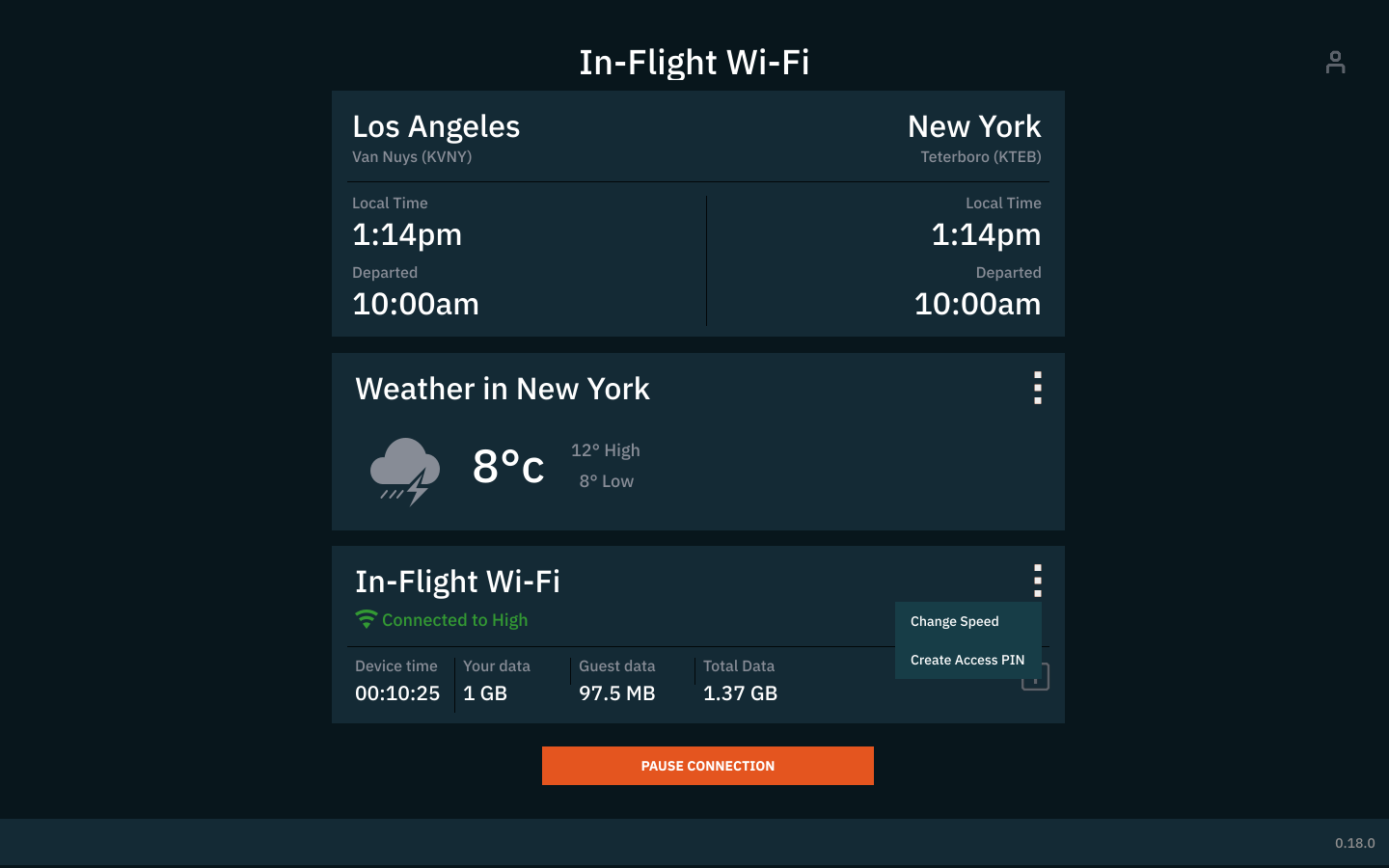
The end-to-end mobile payment journey — from dashboard status through voucher application to payment confirmation.
8 screens · scroll horizontally to view the full flow →
Annotated hotspots reveal the interaction logic, design decisions, and user research findings embedded in each element of this interface.